



In industries ranging from oil and gas to power generation, FRP (fiber-reinforced plastic) components are designed to withstand extreme heat. Unlike metals, high-performance FRP composites remain strong at elevated temperatures thanks to specialized resin systems.
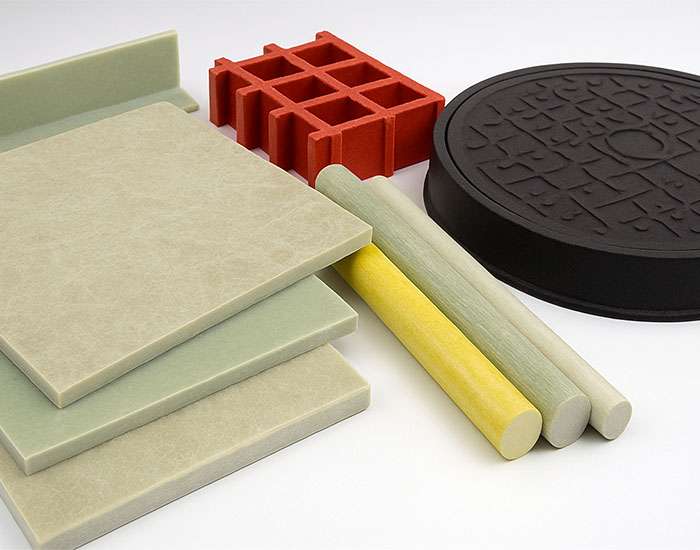
These thermosetting binders (phenolic, epoxy, etc.) offer inherent fire resistance and thermal stability. At the same time, FRP’s low weight and corrosion resistance reduce structural load and maintenance needs.
Epoxy Resins for High-Heat FRP
Epoxy-based FRP resins are a workhorse in demanding environments. They deliver excellent strength, electrical insulation, and chemical resistance.
Many epoxy formulations stay stable up to ~130–150 °C, making them well-suited for high-heat piping, tanks, and load-bearing profiles. For example, epoxy FRP is used in fiberglass beams and fiberglass angles. (Note: these systems typically require heat curing and UV-protective coatings.)
- Outstanding strength and rigidity in composite parts
- Excellent corrosion resistance and electrical insulation
- Thermal stability up to ~150 °C (specialty grades higher)
- Requires post-cure heating; limited UV durability
Phenolic Resins: Extreme Heat and Fire Safety
Phenolic (phenol-formaldehyde) FRP resins are the ultimate high-heat solution. These binders inherently resist fire, emit minimal smoke, and retain their strength under flame and heat.
For example, offshore grating uses phenolic FRP because it “can handle high temperatures and flames while maintaining structural integrity”. Phenolic composites excel in mining, oil & gas, and other harsh environments. They typically tolerate continuous service at temperatures above 150 °C.
Phenolic FRP is ideal for safety-critical applications, such as FRP manhole covers and ladders, in hazardous environments.
- Inherently flame-retardant with very low smoke/toxicity
- Maintains mechanical strength at very high temperatures (>150 °C)
- Used in oil/gas and marine: gratings, trays, cable supports
- Ideal for fire-safe products (e.g., FRP manhole covers, ladders) in hazardous plants
Vinyl Ester & Other High-Temperature Resins
Vinyl ester FRP resins (typically epoxy-modified) combine epoxy-like strength with extra chemical and thermal resilience. These formulations are “known for… high heat distortion temperatures”.
Advanced phenolic-vinyl hybrids can withstand continuous exposure to temperatures of ~150–200 °C. As a result, vinyl ester FRP is commonly used in corrosive, high-heat applications such as tanks, piping, and drainage systems. For example, JMFRP uses vinyl ester in fiberglass rebar and fiberglass tubes for hot chemical services.
- Epoxy-vinyl ester hybrids: superior toughness and high heat deflection
- Excellent chemical resistance; continuous use to ~150 °C (some phenolic types to 200 °C)
- Typical uses: FRP rebar, pipes, tanks, drainage in chemical plants
- Cost-effective polyester: ≤100 °C service in moderate environments
Selecting the Right Resin
Choosing the right FRP resin depends on operating temperature and safety requirements. For general industrial use (up to ~120°C), epoxies and standard vinyl esters are suitable.
If flame retardancy or higher-temperature performance (150–200 °C) is required, phenolic or phenolic-vinyl systems are preferred. Engineers should consult resin datasheets (specifically, glass transition or HDT ratings) for the applicable limits. JMFRP’s technical team can help match the optimal resin system and FRP product to each application.
Our comprehensive FRP product lineup reflects these choices:
- Structural profiles: Fiberglass tubes, fiberglass rods, fiberglass beams, fiberglass angles
- Panels & decking: Fiberglass sheets, fiberglass grating, drainage channels
- Safety & access: FRP manhole covers, fiberglass ladders, fiberglass fences
- Hardware & markers: Fiberglass connectors, cable brackets
- Markers & reinforcement: Fiberglass driveway markers, fiberglass strips, fiberglass rebars
By understanding the thermal limits and benefits of each resin, engineers and procurement specialists can specify the right FRP materials for hot environments. For a deeper dive, see our full article High-Temperature FRP Resins: Epoxy, Phenolic, and More on the JMFRP site.

