


Fiberglass Rebars
Jmfrp – Premier Fiberglass Rebar Manufacturer, Providing Strong, Corrosion-Resistant, and Lightweight Reinforcement Solutions for Enhanced Durability in Construction Projects
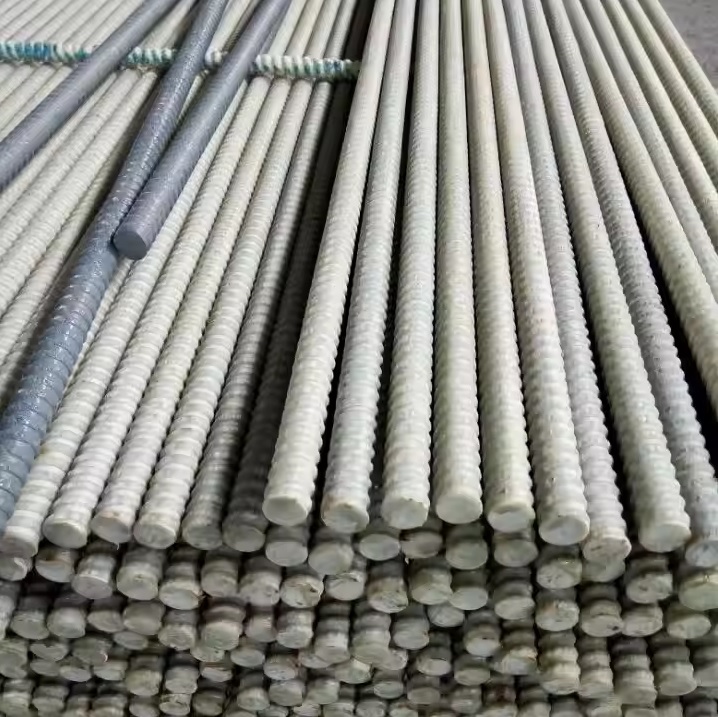
Professional-Grade Fiberglass Rebar
Fiberglass rebar (GFRP Rebar) is a high-performance composite material manufactured through a pultrusion process, combining corrosion-resistant resin with spiral-wrapped high-strength glass fiber reinforcement. With tensile strength over twice that of traditional steel rebar and weighing just 1/4 of equivalent steel, it delivers unmatched corrosion resistance, magnetic transparency, and low thermal expansion. As the ultimate steel replacement, GFRP rebar is widely used in roads, bridges, tunnels, chemical plants, military EMI-shielded structures, and more, ensuring 50+ years of concrete reinforcement.
Why Choose Us?
As China’s leading fiberglass rebar manufacturer, JMFRP delivers trusted solutions through expertise and customization:
50+ Years of Expertise: Specialized in concrete reinforcement with ISO/ASTM-certified products.
Full-Spectrum Applications: Proven in global projects across construction, marine, military, and industrial sectors.
Cost Efficiency: Lightweight design cuts logistics costs; extended lifespan minimizes maintenance.
End-to-End Support: Technical guidance from material selection to on-site installation.
Eco-Friendly Innovation: Low-carbon production aligned with sustainable infrastructure goals.
JMFRP Customization Services
Tailored solutions for diverse engineering needs:
Color Options: White, light green, black, or gray for aesthetic/functional requirements.
Size Range: #2 to #18 (6 mm to 50 mm diameter) for light-duty to heavy-load projects.
Material Engineering: Custom resin formulas for UV resistance, fire retardancy, or extreme temperatures.
Rapid Turnaround: Flexible production lines enable small-batch orders with 7-15 day delivery.
Fiberglass Rebar Applications
Infrastructure: Highways, bridges, dams, and airport runways for lightweight durability.
Corrosive Environments: Wastewater plants, coastal piers, and chemical factories to eliminate rust risks.
EMI-Sensitive Zones: MRI rooms, military radar stations, telecom bases for zero signal disruption.
Submerged Structures: Seawalls, underwater tunnels, and cofferdams with superior seawater resistance.
Architectural Design: Concrete sculptures and complex shapes—easy to cut and bend.
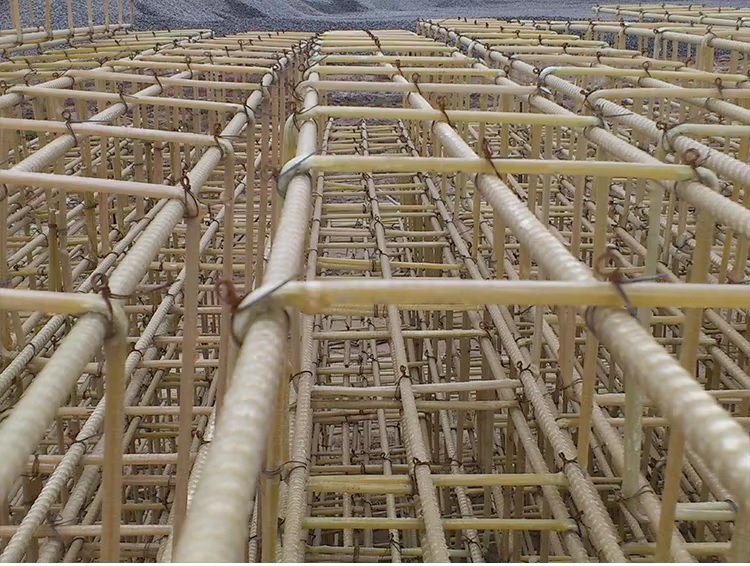
Technical Specifications (Sample Data, Subject to Calibration)
| Rebar No. | Nominal Diameter (mm) | Nominal Diameter (in) | Weight (kg/m) | Weight (lb/ft) |
|---|---|---|---|---|
| #2 | 6.4 | 1/4 | 0.064 | 0.047 |
| #3 | 9.5 | 3/8 | 0.142 | 0.104 |
| #4 | 12.7 | 1/2 | 0.254 | 0.189 |
| #5 | 15.9 | 5/8 | 0.396 | 0.293 |
| #6 | 19.1 | 3/4 | 0.570 | 0.416 |
| #7 | 22.2 | 7/8 | 0.776 | 0.568 |
| #8 | 25.4 | 1 | 1.012 | 0.747 |
| #9 | 28.6 | 1-1/8 | 1.282 | 0.937 |
| #10 | 31.8 | 1-1/4 | 1.582 | 1.164 |
| #11 | 34.9 | 1-3/8 | 1.916 | 1.400 |
| #12 | 38.1 | 1-1/2 | 2.280 | 1.675 |
| #13 | 41.3 | 1-5/8 | 2.674 | 1.959 |
| #14 | 44.5 | 1-3/4 | 3.102 | 2.271 |
| #18 | 57.2 | 2-1/4 | 5.128 | 3.785 |
| Diameter (mm) | Diameter (inch) | Weight (kg/m) | Weight (lb/ft) | Tensile strength (Mpa) | Ultimate Tension (KN) |
|---|---|---|---|---|---|
| 4 | 0.16 | 0.025 | 0.017 | 1150 | 12 |
| 6 | 0.24 | 0.057 | 0.037 | 1100 | 31 |
| 8 | 0.31 | 0.100 | 0.066 | 1050 | 53 |
| 10 | 0.39 | 0.157 | 0.104 | 980 | 72 |
| 12 | 0.47 | 0.226 | 0.149 | 870 | 99 |
| 14 | 0.55 | 0.308 | 0.203 | 764 | 117 |
| 16 | 0.63 | 0.402 | 0.265 | 752 | 149 |
| 18 | 0.71 | 0.509 | 0.336 | 744 | 189 |
| 20 | 0.79 | 0.628 | 0.414 | 716 | 225 |
| 22 | 0.87 | 0.760 | 0.502 | 696 | 270 |
| 25 | 0.98 | 0.981 | 0.648 | 675 | 342 |
| 28 | 1.10 | 1.231 | 0.812 | 658 | 405 |
| 30 | 1.18 | 1.413 | 0.933 | 637 | 450 |
| 32 | 1.26 | 1.608 | 1.061 | 626 | 504 |
Frequently Asked Questions
A: No, fiberglass rebar cannot be bent on-site. It is manufactured to the required shapes and bends at the factory. Attempting to bend it on-site can cause damage.
A: Fiberglass rebar performs well in cold weather, as it does not become brittle at low temperatures. Its resistance to freeze-thaw cycles makes it suitable for use in regions with harsh winter climates.
A: When working with fiberglass rebar, it’s essential to wear appropriate personal protective equipment (PPE), including gloves to prevent skin irritation, safety goggles to protect eyes from dust and particles, and a dust mask if cutting the material.
A: Yes, fiberglass rebar is highly resistant to corrosion, making it ideal for marine and coastal structures exposed to saltwater and harsh environmental conditions.
A: Fibreglass rebar has a higher tensile strength than steel but a lower modulus of elasticity, meaning it is less stiff. This difference must be considered in design calculations to ensure appropriate structural performance.
A: Fiberglass rebar has a lower carbon footprint compared to steel rebar, as its production requires less energy. Additionally, its corrosion resistance leads to longer-lasting structures, reducing the need for repairs and replacements.
A: Yes, fibreglass rebar is suitable for residential construction, including foundations, driveways, and pool decks. Its lightweight nature and corrosion resistance make it a practical choice for various applications.
A: Fiberglass rebar is commonly used in bridge decks, marine and waterfront structures, parking garages, highway and roadway reinforcements, tunnels, industrial plants, power plants, concrete pavements, retaining walls, building foundations, and precast concrete products.