



Fiberglass is one of those materials you might not think of daily, but you can see it everywhere. Fiberglass provides a supporting structure, from the buildings we live in to those we work in, and the cars we drive to the wind turbines that generate clean energy. From construction and aerospace to automotive and renewable energy, fiberglass stands out for its strength, light weight, and ability to endure hostile environments. But have you ever wondered how fiberglass is made? In this article, we’ll guide you through the process from raw materials to the final product and the methods used by manufacturers like Tencom.
Raw Materials: The Building Blocks of Fiberglass

The fiberglass journey begins with a handful of raw materials. While all glass is essential, the glass used for fiberglass formulations is specially developed glass types such as E-glass, S-glass, and H-glass. These types of glass are selected for their unique and desirable properties needed to manufacture fiberglass.
Glass fibers are prepared by closely mixing minerals like silica sand, limestone, and kaolin clay and melting them at extremely high temperatures—usually more than 1,400°C (2,552°F). When the raw materials melt, they produce molten glass, forcing it through excellent nozzles (down to 25 micrometers or so) to form excellent glass filaments.
These filaments are then bundled into strands known as “rovings,” which serve as the foundation for everything fiberglass-related. Depending on the final application, the rovings can either be woven into fabric or kept loose.
The Pultrusion Process: Shaping Fiberglass
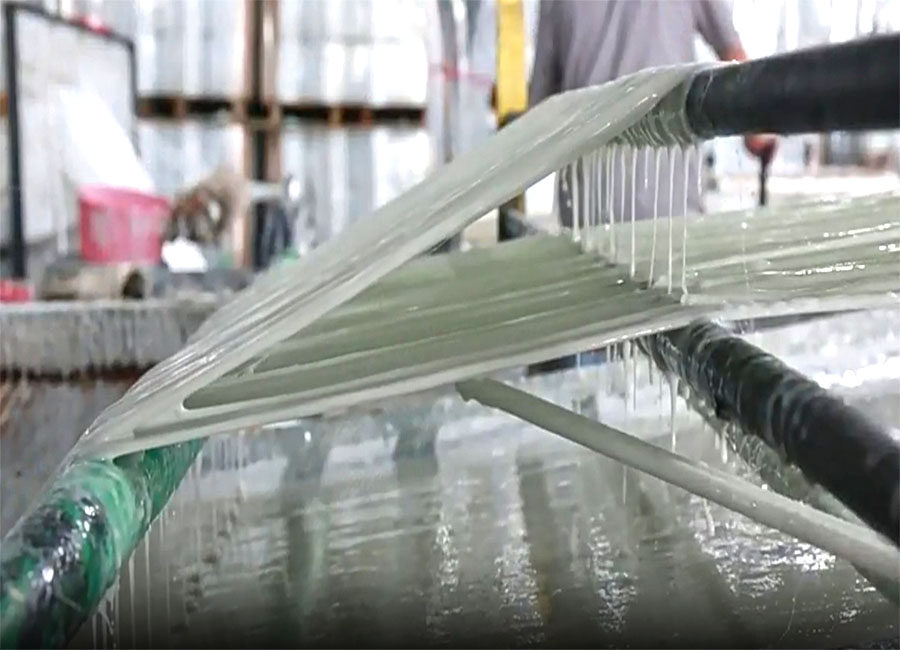
Pultrusion is one of the most common and efficient methods for producing fiberglass products. This process is perfect for creating continuous, firm, lightweight fiberglass profiles. Pultrusion is known for its precision, making it ideal for large industrial projects and custom applications. Here’s how it works:
1. Performing
Before the glass rovings are impregnated with resin, they must be aligned to align the fibers in the correct direction. This is done by drawing the rovings through special rollers that help shape them. Proper performance ensures that the fiberglass will have the right strength and structure for the final product.
2. Resin Bath
Next, the preformed rovings are dipped into a resin bath. The resin serves multiple purposes—it binds the fibers together and gives the fiberglass its key characteristics, like strength, durability, and chemical resistance. The resin composition can vary depending on the end use. Still, it usually includes a polymer, pigment (if coloring is needed), and a catalyst that helps the resin harden during the next step.
3. Heated Die
Once the rovings are thoroughly saturated with resin, they’re drawn through a heated die. This is where the magic happens—the heat activates the catalyst in the resin, causing it to “cure” or harden. This process locks the fibers into place, solidifying the fiberglass and giving it its final shape. The temperature and timing are carefully controlled to ensure the product comes out perfectly every time.
4. Finished Product
After the fiberglass has cured, it’s removed from the die and allowed to cool. In most cases, the fiberglass naturally detaches from the mold and then cuts to the required size. Depending on the application, additional steps such as trimming, painting, or polishing might be applied before the product is ready.
Other Production Methods
While pultrusion is the most common method, other techniques might be used depending on the application’s specific needs. For example, filament winding is often used for cylindrical components like pipes or tanks. Gun roving, on the other hand, is excellent for spray-up processes used in things like boat hulls and large structures.
Though these methods differ, pultrusion is often the preferred method for mass production because it can produce consistent, high-quality fiberglass parts at scale.
Sustainability and Recycling
As fiberglass plays a significant role in many industries, it’s essential to consider its environmental impact. Recycling fiberglass was a tricky business in the past, mainly because the materials are tough to break down. But thanks to recent advancements in recycling technology, that’s changing.
For example, companies like Global Fiberglass Solutions are leading the charge in recycling fiberglass waste—such as old wind turbine blades—into new products like maintenance hole covers and pallets. Plus, much of the fiberglass used today is made from recycled glass, which helps reduce the demand for virgin materials and supports more sustainable production cycles.
Looking Ahead: The Future of Fiberglass
As industries evolve, fiberglass is expected to play an even more significant role. Technological and material science advances are expanding how fiberglass can be used. Whether in aerospace, automotive, or renewable energy, fiberglass applications are growing, and its strength, light weight, and resistance to the elements will continue to make it an indispensable material for many years to come.
With improvements in manufacturing processes and recycling technologies, fiberglass is also becoming more sustainable, making it a key material in the push toward greener manufacturing practices.
Conclusion
Fiberglass is a truly versatile material that combines strength, lightness, and durability. Its production process, especially the pultrusion method, allows it to be molded into various shapes and used in countless industries. Whether you’re working in construction, automotive, or aerospace, fiberglass continues to prove itself as a reliable and indispensable material.
As technology advances, the potential for fiberglass is only set to grow. With innovations in production and recycling, fiberglass will remain a critical material for the future of manufacturing. If you want to incorporate fiberglass into your next project, partnering with an experienced manufacturer specializing in fiberglass composites is a smart move. They can give you the insights you need to make the most of this incredible material.

