



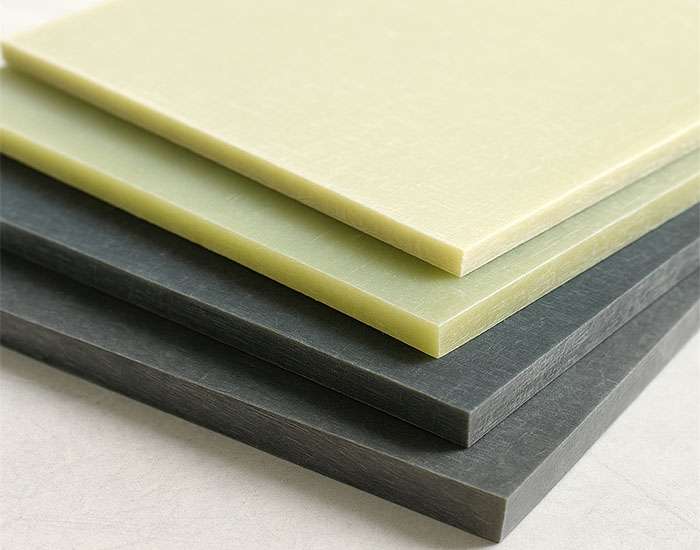
Fiberglass-reinforced plastic sheets (FRP sheets) are engineered composites that combine fine glass fibers with resin to create panels that are remarkably strong yet lightweight. This combination yields a superior strength-to-weight ratio – in fact, fiberglass can exceed steel’s tensile strength while weighing far less. As a result, fiberglass sheets are highly durable, corrosion-resistant, and dimensionally stable, providing lasting performance in harsh environments.
These qualities make them ideal for demanding applications across various sectors, including construction, marine, electrical insulation, signage, and other industrial fields.
Broad Thickness Range for Every Project
JMFRP fiberglass panels are offered in a wide range of thicknesses, from thin laminates to heavy-duty plates, to match any design requirement. Standard FRP sheet thickness typically ranges from approximately 1.5 mm to 50–75 mm. Thin sheets (a few millimeters) work well for electrical insulators or lightweight panels, while thicker boards provide added stiffness for structural cladding and flooring.
Custom gauges between these extremes are also available on request. Panels can be supplied in full sheets (e.g., 1220 × 2440 mm) and are easily machined, cut, or laminated for use in various applications. With JMFRP’s manufacturing capabilities, virtually any thickness within this range can be produced to meet your exact specifications.
Exceptional Strength & Durability
Fiberglass sheets are distinguished by their exceptional mechanical strength and longevity. The embedded glass fibers efficiently carry loads, allowing FRP boards to support heavy forces without buckling. Key advantages include:
- Outstanding tensile strength. Fiberglass panels can rival or exceed the strength of steel on a weight-for-weight basis. This high tensile strength means the panels can support structural loads and resist impact, making them suitable for floors, walkways, and reinforcement applications.
- Corrosion and chemical resistance. Unlike metals, FRP does not rust or corrode. It is impervious to salt water, acids, bases, and many common chemicals. This makes fiberglass ideal for marine environments, chemical plants, sewage systems, and outdoor structures that are exposed to moisture, salt spray, or pollution.
- Electrically insulating. Fiberglass sheets are excellent electrical insulators. They do not conduct electricity or generate sparks, which is crucial for components such as switchgear panels, transformer surrounds, or circuit supports in high-voltage equipment. Their NEMA-rated grades (e.g., GPO-3) ensure consistent performance in electrical applications.
- Lightweight and dimensionally stable. Weighing much less than metals or ceramics, FRP sheets reduce dead load on structures. At the same time, they remain rigid and flat over time – they won’t warp, swell, or shrink even under heat and humidity. This stability supports precise fabrication and long service life.
Together, these properties mean fiberglass sheets deliver reliable strength in harsh conditions. They are favored where durable, low-maintenance panels are required – for example, corrosion-resistant wall linings in food processing plants, lightweight hull sections in boats, or stiff sandwich panels in prefabricated buildings.
Superior Fire Safety
Safety is paramount in industrial settings, and FRP sheets can be formulated for exceptional fire performance. JMFRP’s panels use halogen-free flame retardant resins and additives that meet stringent fire standards. In practice, this means the sheets achieve UL 94 V-0 flame ratings – they self-extinguish quickly without flaming drips – and typically have very low smoke and toxic gas output.
For instance, pultruded FRP building panels are specified to meet UL 94 V-0 and an ASTM E84 flame-spread class 1 (rating of 25 or less). Such certifications ensure that fiberglass cladding, insulation, or cable trays will not contribute significantly to fire spread.
Additionally, fiberglass exhibits inherent thermal stability. It can tolerate high temperatures (often well above 100°C) and provides effective thermal insulation. This helps limit heat transfer and can delay the spread of fire compared to unprotected metal panels.
Together, these features make JMFRP fiberglass sheets a safer choice for electrical enclosures, marine interiors, building facades, and other areas where fire safety is critical.
Fully Customizable Solutions
Every project has unique needs, and JMFRP offers complete customization of fiberglass sheets. Panels can be supplied in a variety of colors and surface finishes. For example, a smooth gelcoat surface provides an easy-to-clean glossy finish, while matte or textured coatings (such as anti-slip textures) improve traction and hide scratches.
Custom colors can be matched for design purposes, signage, or to meet corporate branding. Additional options include UV-inhibitors or flame-retardant coatings, specialized core materials for sandwich panels, or laminating printed graphics onto the surface.
JMFRP also accommodates custom sizes and shapes: sheets can be cut to non-standard lengths and widths, drilled or notched as needed, and even formed into slight curves for complex structures. This flexibility allows engineers and designers to integrate FRP panels into assemblies with minimal post-fabrication work.
Whether you need an off-the-shelf panel or a bespoke composite solution, JMFRP’s technical team can help tailor the fiberglass sheets to your exact requirements.
Certified Quality and Compliance
Quality assurance is central at JMFRP. Our fiberglass sheets are manufactured under a strict ISO 9001 quality management system (and often ISO 14001 for environmental management), ensuring consistent product quality and traceability.
In addition, we adhere to relevant international standards and certifications. Many FRP grades carry UL and NEMA approvals for electrical use (e.g., UL-listed for insulation and flame ratings), and our products comply with RoHS/REACH regulations for hazardous substances.
For the European market, CE marking and EN13501 fire classes can be applied to meet building code requirements. Together, these certifications provide industrial buyers with confidence that JMFRP fiberglass sheets are safe, reliable, and compliant with all relevant regulations for use in major projects.
Applications Across Industries
Fiberglass sheet products serve diverse industrial markets:
- Construction & Architecture: FRP panels make long-lasting wall and ceiling panels, siding, column wraps, handrails, and signage. They resist mold, stains, and weather, thereby maintaining the appearance of buildings, tunnels, platforms, and public transportation.
- Marine & Offshore: Boats, docks, and offshore platforms benefit from fiberglass’s lightweight and saltwater resistance. Hulls, decks, gangways, and instrument housings constructed from FRP remain rust-free and strong in marine environments.
- Electrical & Power: In power generation and industrial electrical gear, fiberglass sheets are used for insulating barriers, busbar supports, switchboard panels, and conductor rails. Their self-extinguishing and arc-resistant properties make them ideal for use in switchgear, transformers, and control panels.
- Signage & Displays: Outdoor signs, lightboxes, and display backs often use FRP sheets as substrates. The panels can hold printed vinyl or direct-printed graphics and withstand UV exposure, rain, and temperature fluctuations without yellowing or degrading.
These examples only scratch the surface. Wherever a combination of lightweight, high-strength, insulation, and durability is needed, fiberglass sheets provide a cost-effective solution.
Request a Quote or Consultation: To learn more about JMFRP’s fiberglass sheet products or to discuss your specific application, please get in touch with our technical team. We can provide detailed specifications, pricing, and guidance on choosing the right FRP sheet for your industrial project. Contact JMFRP today for expert advice and a customized quotation.

