



In modern aerospace design, lightweight aircraft composites like fiber-reinforced plastics (FRP) enable sleek, fuel-efficient planes. These FRP aerospace components combine a polymer resin with glass fibers to achieve high strength while dramatically cutting mass. The benefits are clear: FRP materials reduce weight, enhance durability and corrosion resistance, and meet stringent safety standards. By embracing this lightweight design, manufacturers slash fuel burn and broaden aircraft performance without sacrificing safety or strength.
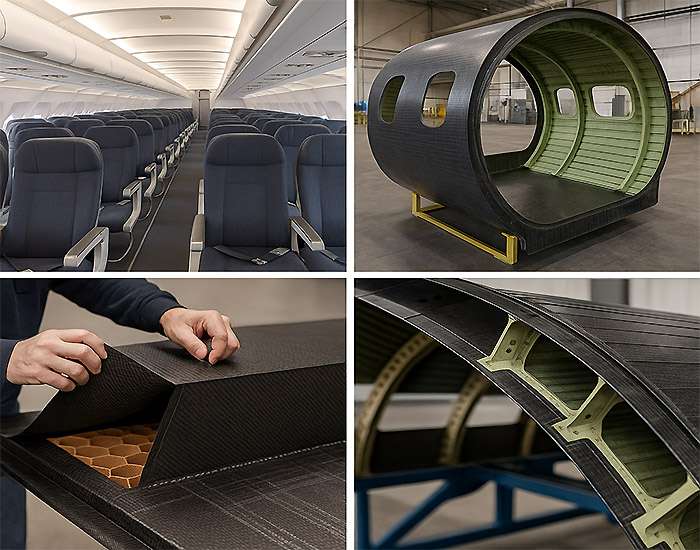
Composite Materials in Aircraft Interiors
Inside the cabin, composite panels and parts have become the norm. Designers use FRP (and other fiber composites) for components wherever weight savings and durability are critical. Key examples include:
Overhead Bins: Pultruded fiberglass bins are much lighter than metal alternatives. Lightweight GFRP overhead bins increase storage capacity while reducing overall aircraft weight.
Seating Structures: Many modern seat frames and tray tables use composite supports. FRP seat components reduce weight and allow for more ergonomic designs, contributing to fuel efficiency.
Bulkheads & Floor Panels: Cabin bulkheads, partition walls, and floor panels often use sandwich composites. Composite panels for these areas benefit from FRP’s high strength-to-weight ratio.
Sidewalls & Ceilings: Non-structural liners, such as sidewall panels and lavatory shells, also leverage FRP’s thin, lightweight properties. These composites preserve a smooth interior finish while trimming pounds.
In all these interior uses, FRP offers moisture and chemical resistance (critical for galleys and lavatories) and can meet FAA flammability and smoke density standards when formulated with aviation-grade resins. Speciality FRP laminates can reduce weight by 50% compared to metal and pass FAR 25.853 fire performance tests.
Composite Materials in Aerospace Structures
FRP composites are equally crucial in aircraft structural components. FRP is ideal for antenna radomes and fairings because fiberglass does not block radio signals and resists weather. Radomes, brackets, and non-load-bearing fuselage elements often rely on pultruded or molded FRP parts.
Other aerospace applications include:
Access Panels and Fairings: Molded composite doors and fairings can be produced as single-shell structures, reducing fasteners and improving aerodynamic performance.
Wing and Tail Fairings: Many trailing-edge and flap fairings are now made of FRP for strength, corrosion resistance, and weight reduction.
Pressurised Gas Cylinders: Composite-wrapped cylinders (often carbon fibre but increasingly hybridised with glass) save over 50% of weight compared to metal alternatives.
These components are often manufactured under stringent quality systems (such as AS9100 certification) and meet ASTM and aerospace OEM specifications. With excellent fatigue resistance, FRP structural parts reduce maintenance over long service lives.
Advantages of Fiberglass Composites in Aerospace
Why are FRP aerospace solutions becoming the go-to for cabin and structural parts?
Lightweight and Strong: FRP parts weigh 20–75% less than metal counterparts. Pultruded fiberglass can be comparable in strength to steel while drastically reducing mass.
Corrosion Resistance: Fiberglass does not rust or corrode. FRP panels and structures remain stable under humidity, salt spray, and chemical exposure, which is important for both interior and exterior components.
Ease of Manufacturing: Pultrusion and molding processes allow manufacturers to create complex shapes in one piece, reducing fasteners, joints, and errors. Fewer subassemblies mean lighter, faster-to-assemble structures.
Cost and Lifecycle Benefits: While tooling costs may be higher initially, the lifecycle savings in fuel, maintenance, and corrosion prevention make FRP highly cost-effective. Automated processes like pultrusion also lower part costs at volume.
Certifications and Standards
All aerospace components must meet strict regulatory standards. FRP components for aircraft interiors often meet:
FAR 25.853 (flammability, smoke, and toxicity standards)
ASTM D638 / D790 (tensile and flexural testing for plastics)
AS9100 (quality management systems for aerospace manufacturers)
Working with certified suppliers ensures compliance from design through delivery.
jmfrp: Trusted Manufacturer of FRP Aerospace Components
Meeting aerospace demands requires reliable, experienced suppliers. JMFRP specialises in high-performance fiberglass components, supplying:
Fiberglass tubes and rods for interior supports, brackets, and mounts
Fiberglass grating and panels for walkways, cargo floors, and technical platforms
Custom pultruded profiles for aerospace substructures and cabin fixtures
All JMFRP products are manufactured precisely, using aviation-grade resins and continuous process controls. Our fiberglass tubes and rods are up to 75% lighter than steel and offer comparable mechanical strength. With ISO and AS9100-certified production partners, JMFRP ensures that every component meets performance and regulatory expectations.

